
The 2027 championship
Online qualifiers begin in 2027, eight players reach the finals, and the finals are in Japan on 25 April 2027. Entry details have not been published; the official tournament site is the only place they will appear.
The DEAD OR ALIVE 6 Last Round Championship is the first official tournament tied to this release, and it is the strongest reason to take the game seriously rather than casually. The confirmed details are few but specific: online qualifiers starting in 2027, eight places in the finals, and a final event in Japan on 25 April 2027.
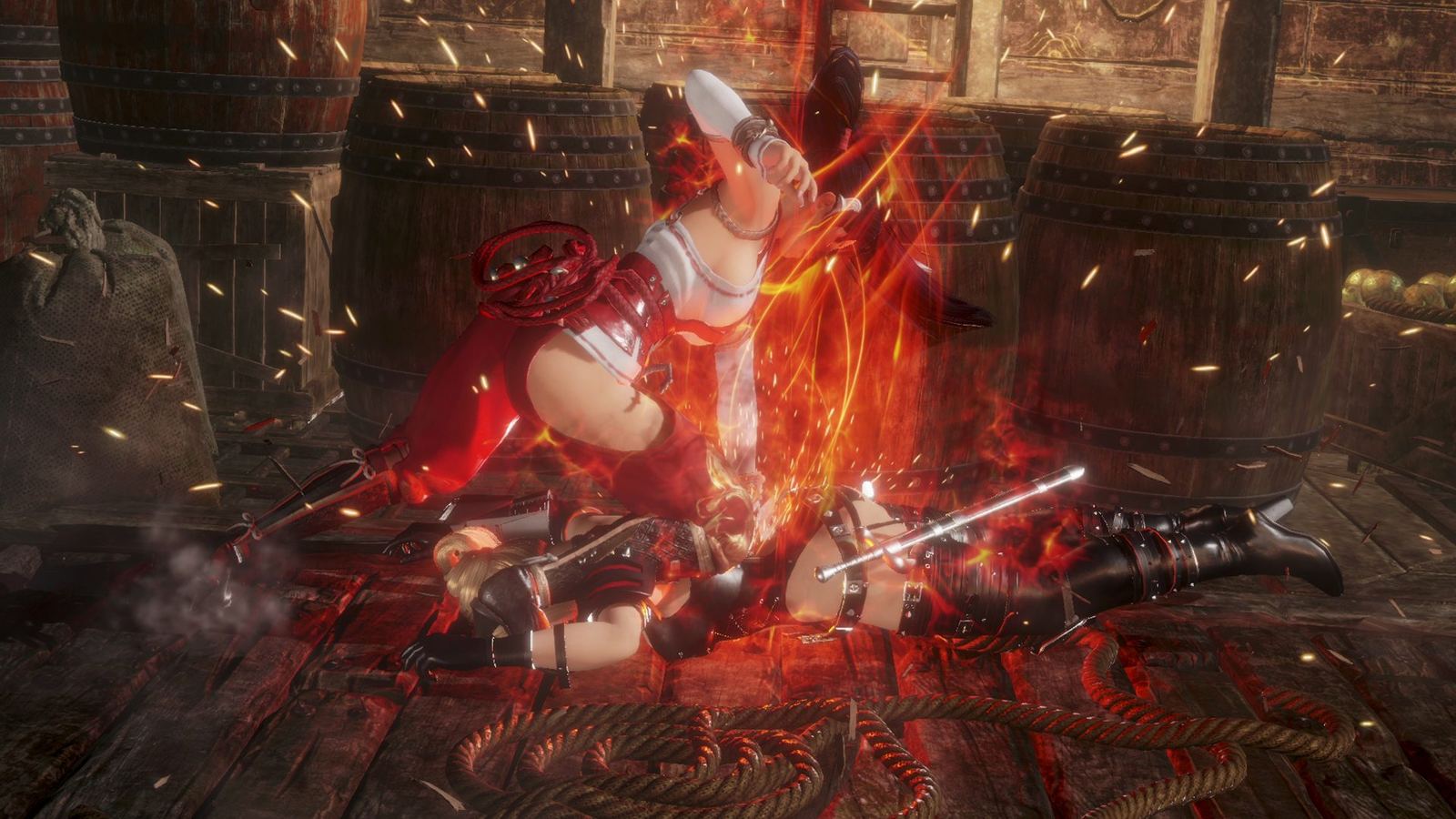
Confirmed facts
| Item | Detail |
|---|---|
| Event name | DEAD OR ALIVE 6 Last Round Championship |
| Format | Official international tournament, online qualifiers from 2027 |
| Finals places | Eight |
| Finals date | 25 April 2027 |
| Finals location | Japan |
| Entry fee, ruleset, platform | Not published at the time of writing |
KOEI TECMO's announcement points players to the official tournament site for more information. This page does not invent an entry form, a bracket size or a prize pool, because none of those were in the announcement.
Eight finals places
Eight finals places for a global online qualifier means the qualifying route is narrow. It also means the travel and scheduling burden falls on a small group, which is typical for a first official event after a relaunch.
| Question | What the announcement supports |
|---|---|
| How many qualify? | Eight |
| How many qualifiers? | Not stated |
| Which regions? | Not stated; the event is described as global |
| Which platform? | Not stated |
| Is there an entry fee? | Not stated |
And if you are planning to compete, the official site is the only source that can answer those rows. Anything else is a community assumption.
A realistic preparation window
The finals are in April 2027. Qualifiers begin in 2027. That gives a new player roughly a year to move from beginner to competitive, which is tight but not impossible if the practice is structured.
| Month | Focus | Evidence you are on track |
|---|---|---|
| 1 | The triangle and one character | You can explain every loss in a three-match session |
| 2 | Punishment and defence | You land the same punish in real matches |
| 3 | Break Gauge decisions | You can justify every gauge spend after the round |
| 4 | Stage positioning | You use hazards without chasing them |
| 5-6 | Matchup familiarity | You know the free four and the five DLC fighters |
| 7+ | Tournament practice | You can play a set without tilt |
That plan does not guarantee a finals place. It does mean you will not be the player who enters a qualifier having only played the tutorial.
Practice order
The seven-day route is the first month compressed. The triangle page is the core read. The Break Gauge page is the conversion. The Danger Zone page is the stage layer that separates online players from tournament players.
Practise on the version you will compete on. If the qualifiers run on PS5, do not spend six months on PC and hope the transition is free.
Championship limits
It is not a DOA7 event. The next game has no date, and the championship is for Last Round. Anyone linking the two is blending two announcements from the same press release.
It is also not a confirmation that the series' competitive future is secure. One event with eight places is a signal, not a roadmap. The DOA7 hub keeps the next project's confirmed facts separate from the current game's tournament.
Why this event matters more than a normal tournament
A first official tournament after a relaunch is a statement about intent. Eight finals places, a Japanese final and a 2027 qualifier season tell you the publisher is treating Last Round as a competitive product, not a nostalgia re-release.
It also gives players a reason to practise with a date attached. A ladder without a tournament is a hobby; a tournament with eight places is a goal.
Qualifier demands
Online qualifiers reward consistency more than highlight plays. The skills that matter are the boring ones.
| Skill | Why it matters in a qualifier | Where to build it |
|---|---|---|
| Stable defence | A set is long; panic costs rounds | Training drills |
| Matchup knowledge | You will meet the full roster | Character page |
| Gauge discipline | One wasted bar can lose a set | Break Gauge page |
| Stage awareness | Hazards decide close rounds | Danger Zone page |
| Tilt control | A lost round becomes a lost set | Online play page |
None of those require a secret technique. They require repetition against people who punish mistakes.
Calendar, honestly
Qualifiers begin in 2027. The finals are 25 April 2027. Between now and then there is one anniversary window, one sale and roughly five months of preparation if you start today.
| Window | What to do | What not to do |
|---|---|---|
| December 2026 | Pick a main, finish the beginner route | Enter a qualifier |
| January 2027 | Build one reliable punish and one anti-air | Chase tier lists |
| February 2027 | Learn the five DLC matchups | Switch characters |
| March 2027 | Play sets, not single matches | Practise only combos |
| April 2027 | Taper, travel, sleep | Change your whole game plan |
The taper row is not a joke. Players who rebuild their game the week before an event usually lose to the player who did not.
Open questions
Entry requirements, regional eligibility, the platform, the bracket format, the prize pool and the broadcast schedule have not been published. The official tournament site is the only place those will appear.
This page will not guess them. A wrong entry requirement is worse than a blank field, because someone will plan travel around it.
Realistic goal
For most players, the realistic goal is not a finals place. This is to enter a qualifier with a game plan and leave with a record of what broke. That record is worth more than a first-round win, and it is the same input the training page uses.